

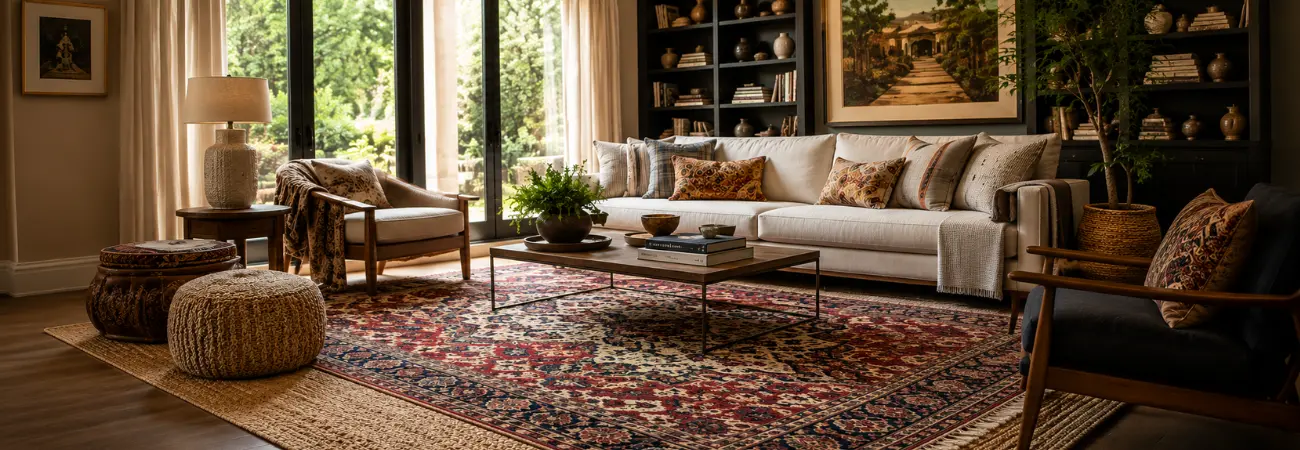
Rug layering is the practice of layering two or more rugs on top of each other to add texture and coziness to a room. Decorators and designers reportedly employ layering to section bland floors, ground furniture groupings and bring a more styled and polished look to a room.
Because “there is a right way to layer area rugs,” and learning how to layer rugs is a crucial step to becoming a fashionable, modern interior designer.
Why Rug Layering is Important?
In Indian homes, ideas to layer rugs are in high demand. When floors are styled with marble and wood in interiors, the warmth and softness that rugs contribute is lacking. That’s why there’s an uptick in people Googling “how to layer handmade rugs” or searching for a full rug layering guide before they style their homes.
That’s why more people are Googling how to layer handmade rugs or searching for a full rug layering guide before they style their homes.
It works well because it:
- Makes simple rooms feel more thoughtfully designed.
- Adds comfort in homes with hard flooring like tiles or marble.
- Helps divide open spaces into functional zones.
- Blends traditional handmade rugs with modern interiors.
From sourcing at the carpets shop in India to the best quality natural material with the best and highest standards in quality in the premium luxury handmade rugs, Layering instantly elevates their beauty.
What Is Rug Layering and Why Is It So Popular?
Layering rugs refers to putting two rugs together as opposed to just using one. A big base rug is under them and a little decorative rug is on top.
This technique is now widely used in layered rugs in living room designs, especially in urban homes where people want a quick transformation without renovation.
It’s popular because it fits perfectly into modern rug layering techniques and everyday layering area rug styling.
It helps because:
- It adds instant texture without changing furniture.
- Makes large rooms feel more connected.
- Defines small spaces like studio apartments.
- Highlight statement rugs instead of hiding them.
- Creates effortless modern rug layering ideas.
Many designers also call this approach part of interior designer rug styling, especially when working with vintage rug layering or Persian rug layering ideas.
The Basic Rules of Rug Layering Every Homeowner Should Know
If you want to understand how to layer rugs correctly, these simple rules are essential.
Start with a base rug that anchors the room. Most designers prefer wool or flatweave rugs from trusted sources like a wool carpets store or handmade collections.
Then add a top rug that creates personality—this is where hand-knotting rug styling, Kashmiri Silk Carpets, or Afghan Rugs work beautifully.
Good rug layering tips include:
- One rug should always dominate visually.
- Avoid mixing too many bold patterns.
- Keep color tones in harmony.
- Maintain proper furniture balance.
- Mix textures intentionally, not randomly.
This is the foundation of all rug layering techniques used in premium homes and luxury rug layering ideas.
How to Layer Rugs Like an Interior Designer?
If you’re learning how to layer rugs, the process is simple but thoughtful.
Start with a base rug like wool rugs, jute, or cotton dhurries. These are commonly found in Indian carpet and rug collections or a carpet supplier in Delhi.
Then layer a statement rug on top. This could be:
- Kashmiri rugs for elegance
- Persian rugs for rich detail
- Vintage-inspired rugs for character
- Hand-knotted rugs for craftsmanship
This is where how to layer handmade rugs becomes important because handmade textures behave differently from machine-made ones.
The key idea behind artisan rug styling is contrast. A neutral base with a detailed top rug creates depth. This is what defines strong layered rug ideas for home styling.
Room-by-Room Rug Layering Ideas
In living rooms, layered rugs in living room setups work best when a neutral base supports a patterned top rug. This is one of the most common rug layering ideas in modern apartments.
- Bedrooms: In bedrooms, soft textures like wool rugs or silk carpets for living room style pieces make the space cozy and warm.
- Dining rooms: They require practicality, which is why simple wool rug layering ideas work best to allow chair movement.
- Entryways: They benefit from durable bases like Kilim carpets or handmade runner carpets layered with decorative top rugs.
These ideas are widely used in layered rug ideas for home styling and modern interiors.
Best Handmade Rug Combinations for Layering
The best luxury rug layering ideas often come from handmade combinations.
- Kashmiri rugs over wool rugs: Kashmiri rugs add fine detail and elegance, while wool bases provide warmth and a rich layered luxury look.
- Jaipur dhurries layered with cotton bases: Jaipur dhurries bring bold colour and pattern, balanced by soft cotton bases for a relaxed and traditional feel.
- Persian rugs over neutral handmade rugs: Persian rugs stand out with intricate designs, while neutral handmade bases keep the space grounded and visually balanced.
- Tribal rugs with soft wool foundations: Tribal rugs add earthy, bold character, while wool foundations soften the look and create a warm, inviting atmosphere.
- Bold geometric rugs paired with simple textures: Geometric rugs become focal points when paired with simple textured bases that reduce visual clutter and add subtle depth.
These combinations are widely used in handmade antique carpets, handmade Kashmiri rug styling, and premium handmade Indian carpet interiors.
If you’re exploring options, a trusted carpets exporter in India or a buying guide for Kashmiri rugs can help you choose better combinations.
How to Layer Rugs Without Making a Room Look Busy?
When learning how to layer rugs correctly, balance is everything.
The biggest mistake is overloading the space with patterns. Instead of creating depth, it creates confusion.
A better approach is simple rug layering tips:
- Let one rug lead visually: Choose one dominant rug as the focal point, while the second rug stays subtle and supports the overall design.
- Keep tones in the same color family: Stick to similar shades so both rugs blend naturally, creating harmony instead of visual clash in the space.
- Leave visible floor space: Allow parts of the floor to show, which prevents the layered rugs from feeling heavy or overcrowded.
- Avoid mixing too many strong patterns: Limit bold patterns to one rug, keeping the other simple to maintain balance and avoid visual chaos.
This is especially important in small homes where layering rugs over carpet or multiple layers can quickly feel heavy.
Common Rug Layering Mistakes
Even good rug layering techniques can go wrong if not done carefully.
- Size overlap issue: Rugs that are too similar in size reduce contrast and remove the visual depth needed for effective layering.
- Furniture imbalance: Incorrect rug placement under furniture disrupts room flow and makes the overall space feel uneven or poorly arranged.
- Pattern overload problem: Too many bold patterns compete for attention, creating visual chaos instead of a clear focal point in the room.
- Texture mismatch clash: Clashing textures feel uncoordinated and unplanned, reducing harmony and making the layered setup look accidental rather than designed.
These mistakes are common when people try DIY rug layering guide styling without planning proportions like Right Rug Size for Every Room principles.
Are Layered Rugs Practical for Everyday Homes?
Yes, and they are becoming more popular in rugs trends 2026.
Layering helps protect expensive rugs like hand knotted rugs while allowing flexible interior updates. It also works well in homes using luxury handmade rugs or silk on silk carpets combinations.
It also supports maintenance when paired with services like carpet washing services or Carpet restoration for long-term care.
When Should You Layer Rugs and When Should You Avoid It?
Use how to layer rugs techniques when a room feels empty or needs definition. It also works well in open layouts where zoning is needed.
Avoid layering when:
- The room already has heavy furniture
- Space is too small or cluttered
- Too many décor elements already exist
In such cases, even good modern rug layering ideas can feel overwhelming.
Conclusion
Knowing how to layer rugs is one of the simplest ways to refresh a home sans the tear-up and major cost. Whether you’re learning how to layer area rugs, playing around with rug layering ideas or perusing a full rug layering guide, the principle stays the same — balance and contrast.
The right base rug paired with a curated handmade overlayer can instantly make a room feel more grounded, warm, and intentionally styled. That’s the essence of how to layer rugs — to create a balance with texture, scale and material — and not just put one rug on top of another.
While you’re working out how to layer area rugs or just experimenting with rug layering techniques, the quality of both rugs matters as much as the look. A solid foundation and a made top layer is what creates fresh, contemporary rug layering ideas.
That’s where Jansons Carpets fits in. As a leading carpets supplier in India, we offer rugs that work perfectly for layered rug ideas for home and everyday interiors. Our range includes carefully crafted pieces such as:
- Kashmiri rugs
- Woolen rugs
- Tribal rugs
- Kilim carpets
- Wool rugs
- Persian rugs
- Afghan Rugs
- Handmade Rugs from India
- Bold Geometric Rugs
Each of these works differently in a rug layering guide setup—some act as perfect base layers, while others become statement pieces in layered rugs in living room designs or more refined hand-knotted rug styling arrangements.
So if you’re ready to add some serious dimension to your interior and learn the right way to layer handmade rugs, it all begins with selecting pieces that naturally complement each other.
Call us at +91 98111 29095 to help you find the best rugs for your space, and start creating your own layered look with confidence.
FAQs
Q1 . What is the best rug combination for a living room?
A neutral wool base with a patterned Persian rug or vintage rug layering piece works best.
Q2 . How much smaller should the top rug be?
The top rug should cover about 30%–70% of the base rug for balanced rug layering guide styling.
Q3 . Can layered rugs make a small room look bigger?
Yes, when done properly using clean rug layering techniques, they create visual depth.
Q4 . Should both rugs have patterns?
Usually no. One should be neutral to support the interior designer’s rug styling balance.
Q5 . Can layered rugs be used in dining rooms?
Yes, as long as they allow easy chair movement and proper alignment.