

Most people start shopping for a rug by measuring the room, and end up arguing with themselves about colour. Fair enough. It’s a big purchase, and it sits there for years. Our carpets and rugs collection in India puts Kashmiri, Persian, tribal and wool designs side by side so you can look at them together. Below are a few notes on each style, then some help with choosing.
Explore Our Carpets and Rugs Collection in India
Our luxury carpets and rugs collection is sorted by style. Check out our Carpets and Rugs Collection in India:
Kashmiri Carpets
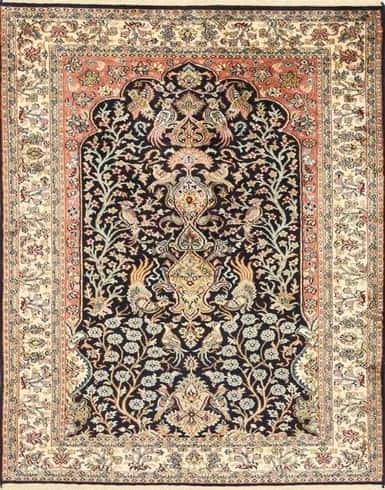
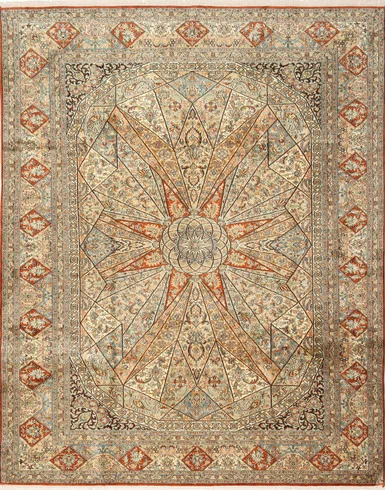
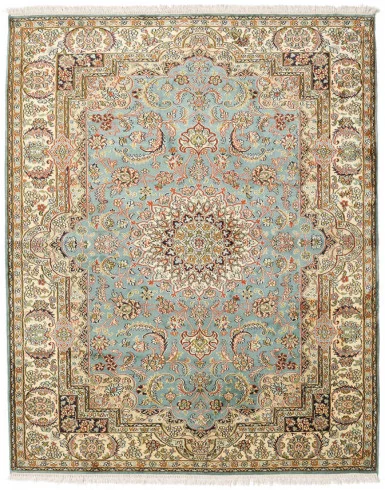
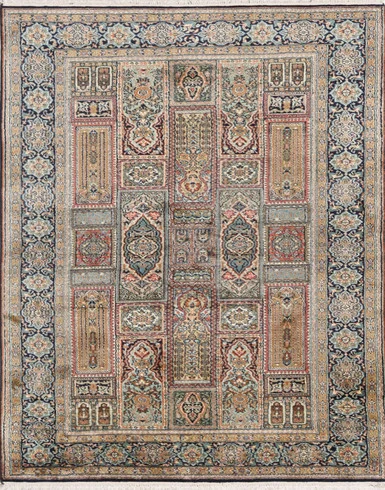
Kashmiri carpets are tied in each knot. Knot count, meaning how many knots go into a given area, decides how fine the drawing can get, so leaves and vines come out crisp when it’s high. A carpet like that can sit on the loom for months. Most are wool. Kashmiri silk carpets are the rarer ones, and the pile seems to change colour as you walk past because silk catches light at an angle. They’re delicate, so a bedroom suits them better than a hallway. Thinking about one? Check out our guide to buying perfect Kashmiri carpets.
Persian Carpets
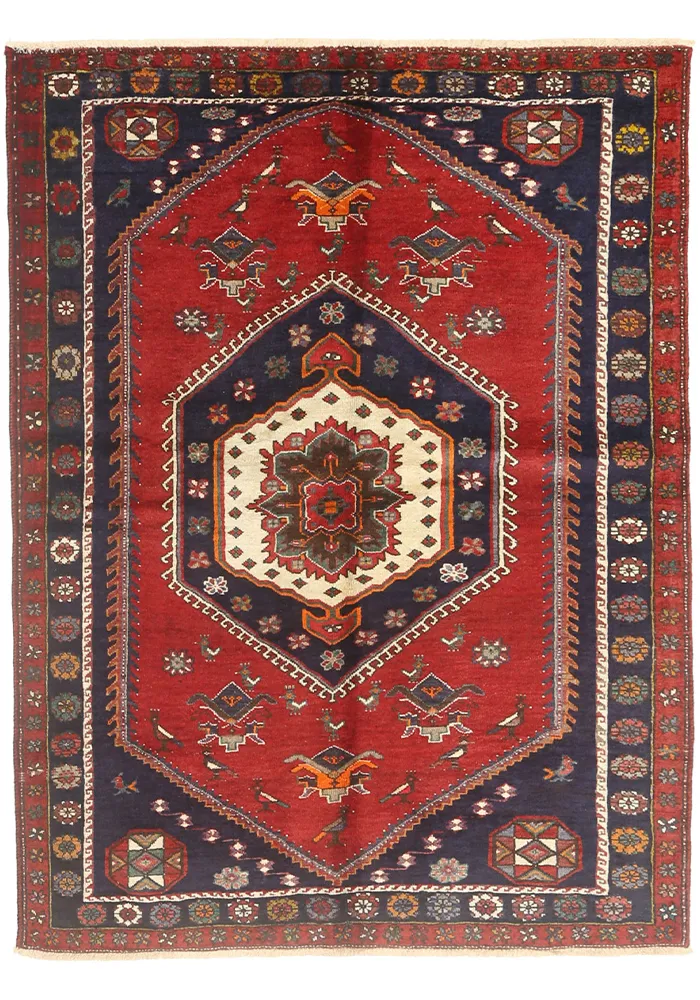
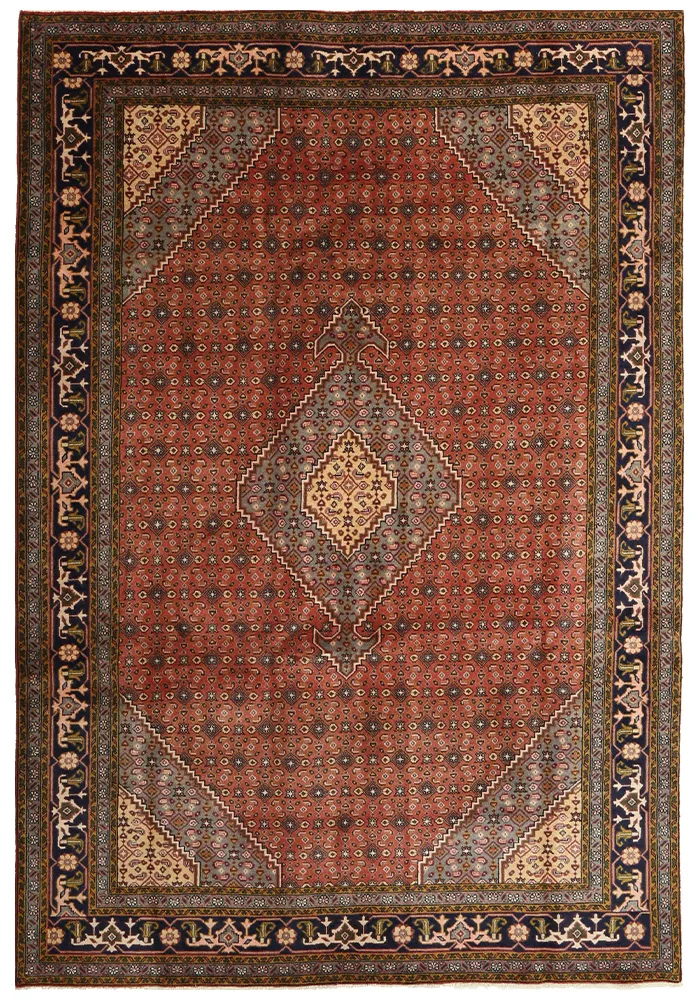
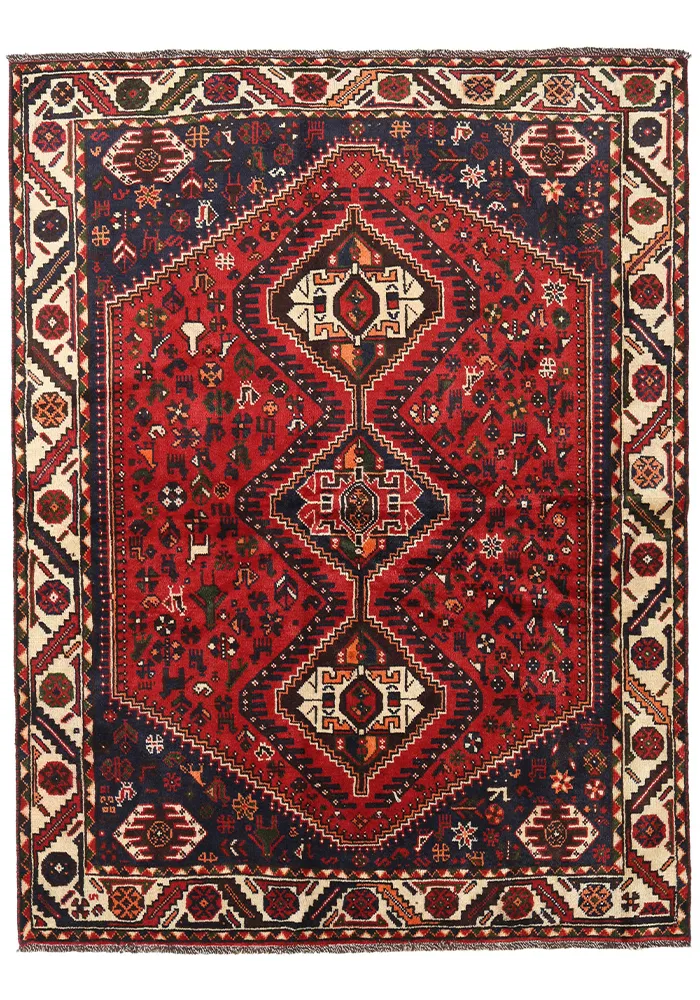
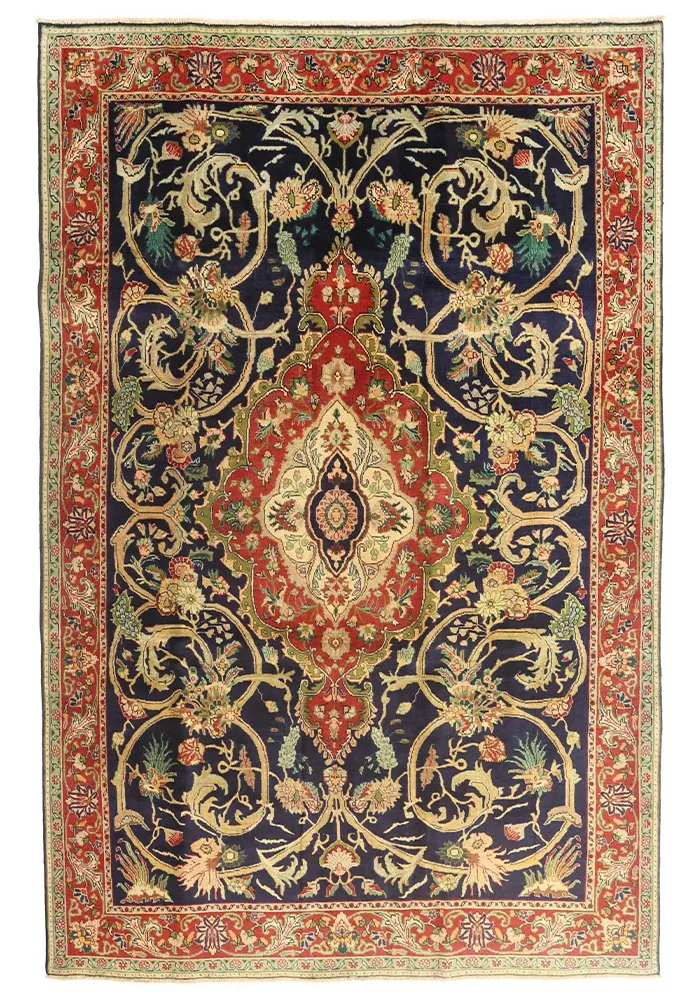
Persian rugs follow a plan. A medallion sits in the middle, ornament fills the field and a border closes the frame. Red and indigo dominate.
The border does more than you’d expect. A broad band with narrower stripes on either side is what keeps the middle of the design settled. These rugs look best in rooms that already have some weight, a wooden sideboard say, or a deep sofa. In a busy room, pick one with a plain field.
Tribal Carpets
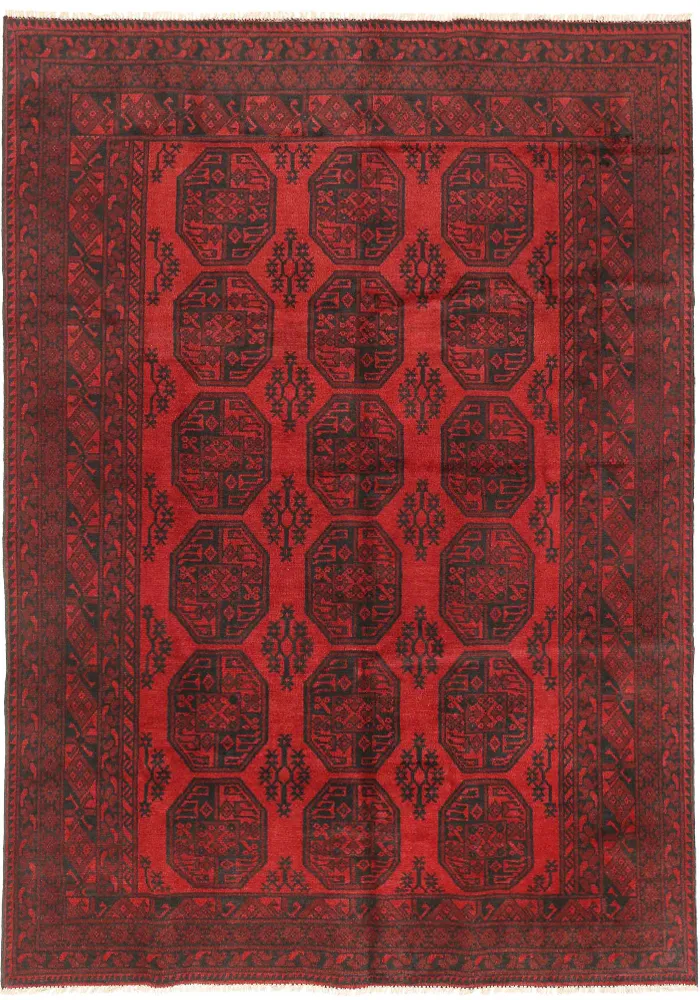
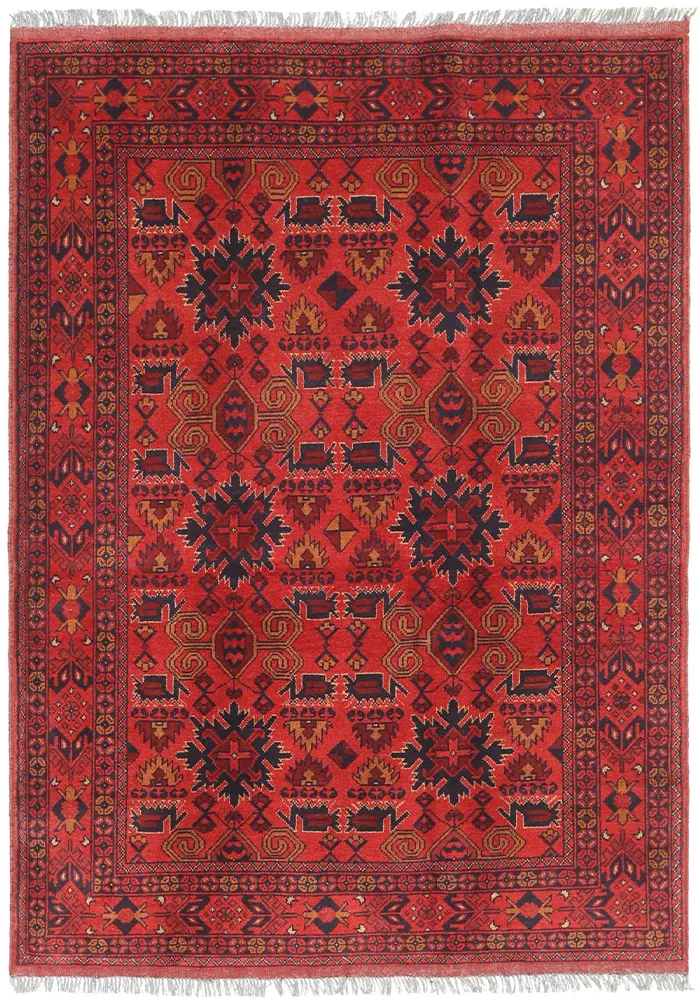
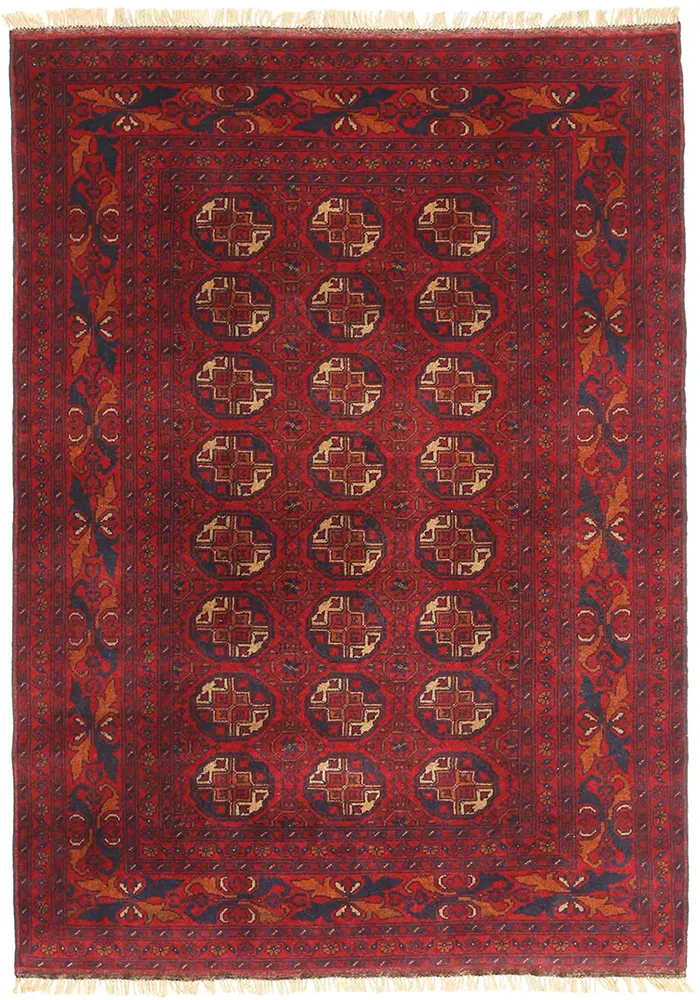
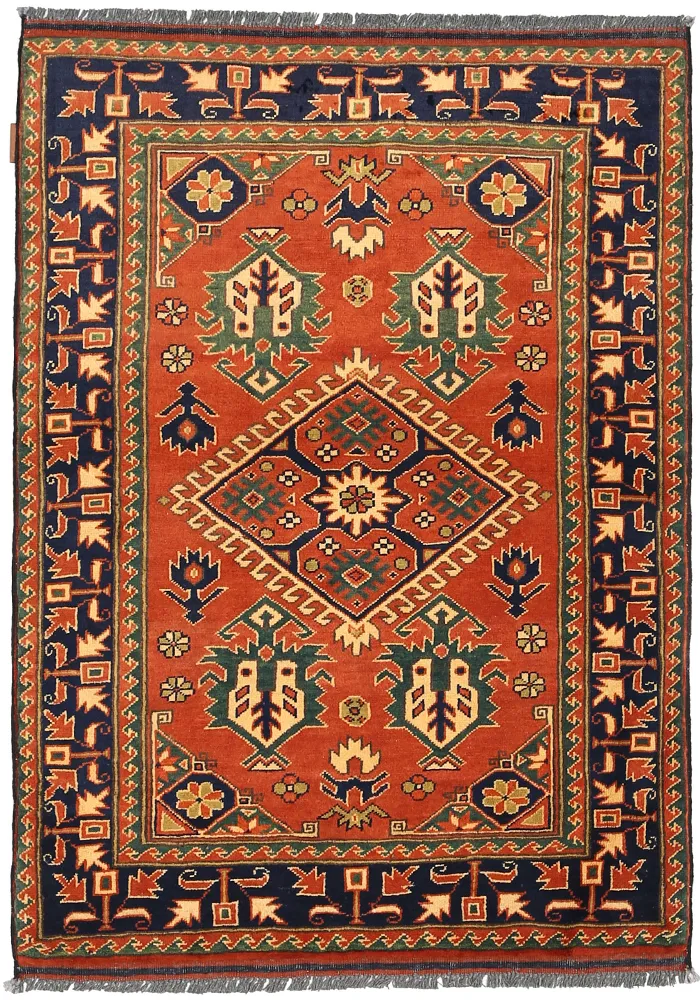
Tribal rugs are the loosest of the lot. Diamonds and steps, tied by hand, so the rows drift a little. Nobody was trying to make them look printed. The earthy colours warm up a room that feels too neat, and the bold shapes don’t mind a patterned cushion nearby. Pile height changes from piece to piece, so the listing is worth a read.
Kilim and Wool Carpets
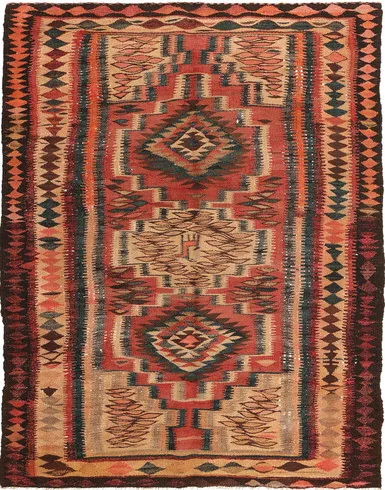
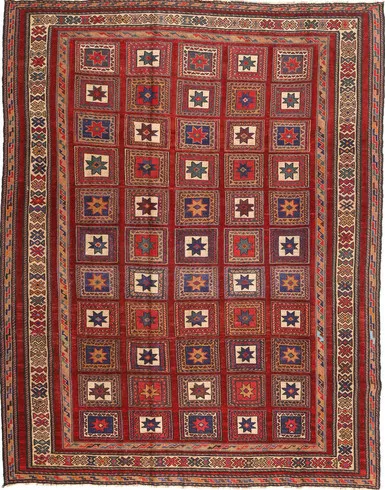
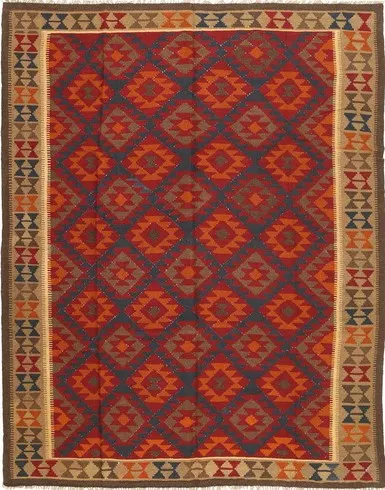
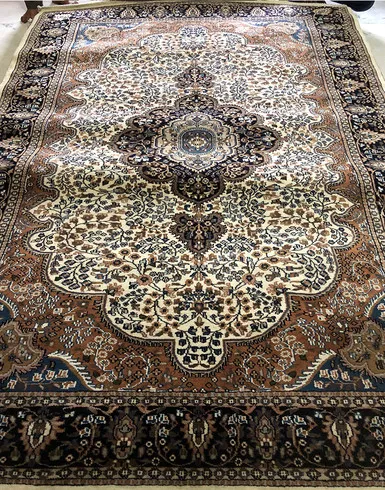
Wool rugs are warm, springy and quiet underfoot, though how a particular piece behaves depends on how it was made. Knotted wool pile is the plush kind.
A kilim carpet has no pile at all. The colour is woven into the structure, so the edges between shades look stepped and sharp. It’s thinner and lighter, which helps under a dining table or down a corridor, and easy to fold if you ever move house. Check the construction on the listing before you decide.
How to Choose the Right Carpet or Rug for Your Home?
Choosing the right rug for your home depends on five questions. These are:
| What to Consider | What to Think About |
| Room and Size | Will the rug fit the space and furniture while leaving enough floor visible? See how to choose the right rug size. |
| Material | Should you choose wool, silk or another material? Is it suitable for the room? |
| Design | Should the rug blend in with the existing décor or stand out as a statement piece? |
| Construction | Knotted, flatwoven and tufted rugs differ in texture, durability and wear. |
| Maintenance | Can you realistically maintain and clean the rug in that space? |
Carpets for home use and rugs for home use start the same way, with the room. A hallway and a bedroom might take the same pattern but not the same fibre. Living rooms need something sturdy, so wool pile. Bedrooms want softness. Dining rooms wear rugs out faster than you’d expect, because of the chairs, which is why flatweaves do well there.
Size is where people slip. If it’s too small, the finished room appears to have missing furniture, so let the front legs of the sofa sit on the rug.
What Makes Handmade Carpets and Rugs Different?
They are differentiated by the knotting, fibre, dye and finishing – they all matter in the completed piece. Two rugs with virtually the same pattern can feel very different. Handmade carpets in India can take weeks or even months to produce on a loom. You can see that if you turn one over, the pattern appears equally on the back. Those tiny changes of colour, or abrash, are often a new batch of wool, and are just part of the handknotting process. A wonky edge though, is less so, so look at the pictures.
Machine-made rugs are uniform, faster to make and easier on the budget. Handmade rugs cost more and feel different. Which one you want depends on what you want from the floor.
Indian carpets and rugs also carry regional habits in their finish, and Indian carpet collections tend to show where a weave comes from. Here’s how hand-knotted rugs are made, and our handmade vs machine-made rugs comparison covers the trade-offs.
Explore Carpet and Rug Designs with Jansons Carpets
Pick a few favourites and put them side by side. Size, fibre and construction will tell you more than colour. We offer a wide range of carpets and rugs collection in India, from finely knotted Kashmiri pieces to relaxed flatweaves, and as a carpet supplier in India we’d rather you took your time.
Everything in our carpets and rugs collection in India is listed with dimensions and materials. The carpet and rug collection is sorted by style, and you can go through the carpet collection in India and the rug collection in India together if you’re undecided. If you plan to buy carpets and rugs online, those details let you compare premium carpets and rugs without guessing. Luxury carpets and rugs can look different on a screen than in daylight, so read the product details closely. Open two or three pages at once. Differences you’d miss on one page show up fast next to another. A carpet should be chosen as carefully as it was woven. As a leading carpet shop in India, Janson Carpet treats every carpet in our collection with exactly that in mind. We have a collection of the following carpets:
- Wool Rugs
- Afghan Rugs
- Tribal Rugs
- Kashmiri Silk Rugs
- Kilim Carpets
- Bold Geometric Rugs
- Persian Rugs
- Vintage-inspired rugs
So what are you waiting for? Explore more at jansonscarpets.com, visit our Delhi store, or call +91-9811129095.
FAQs
Q1 . Which carpet material should I choose for my living room?
Wool, usually. It’s the common pick for carpets and rugs in India because it’s warm and copes with daily use. Silk suits quieter corners.
Q2 . What size carpet should I get for my room?
Try the size of the space and then hold the carpet up to your furnishings. For a living room, a sofa and chairs with front legs sit on the rug. For a dining room, the rug ought to be massive enough that chairs keep on the rug when pulled out. Read our how to choose the right rug dimension information.
Q3 . How do I look at a handmade rug before buying online?
Measuring, composition, original designs, craftsmanship, pictures, cleaning & maintenance instructions, information from the seller about the product. Click on each to enlarge and read. This is relevant to hand knotted or woven carpets from India and from other places. If you are uncertain, always ask prior to ordering.
Q4 . How can I compare two carpets with similar designs?
Look past colour. Compare material, construction, size, finishing, condition where relevant and price. Two rugs that look alike on a screen can differ a lot on those points.