

Kashmir Silk Carpets and Rugs in Delhi
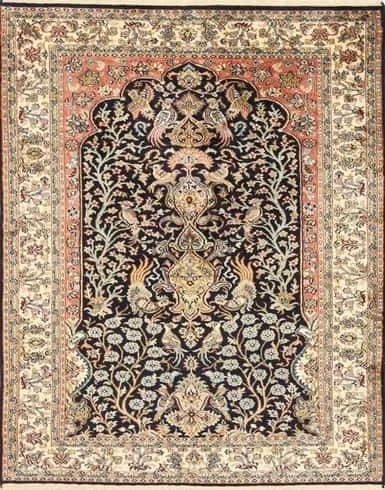
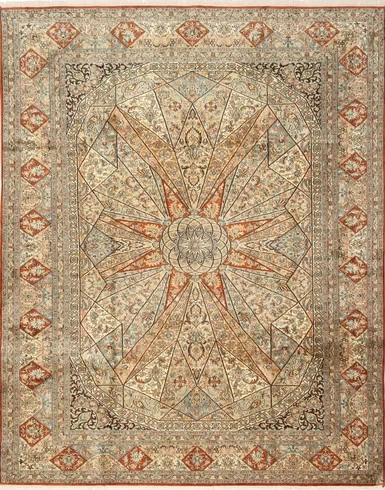
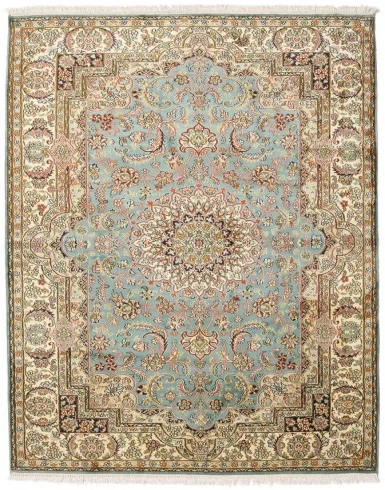
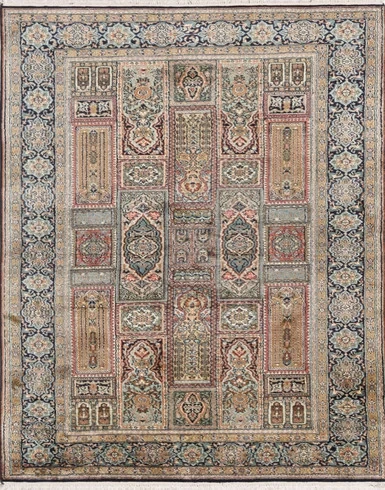
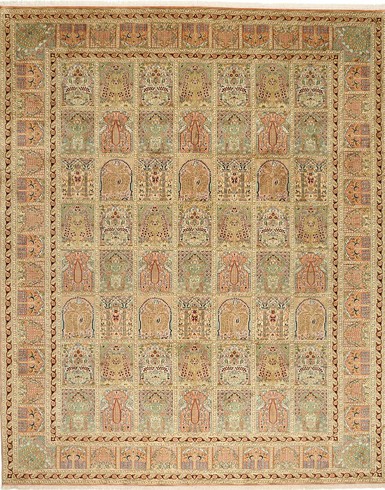
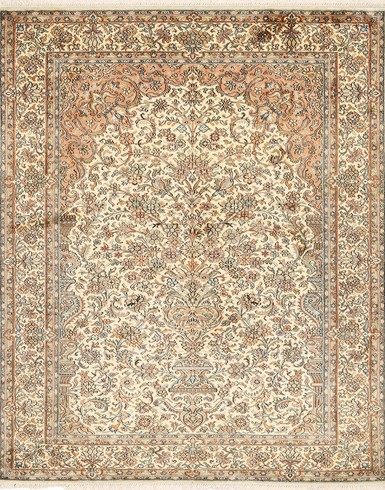
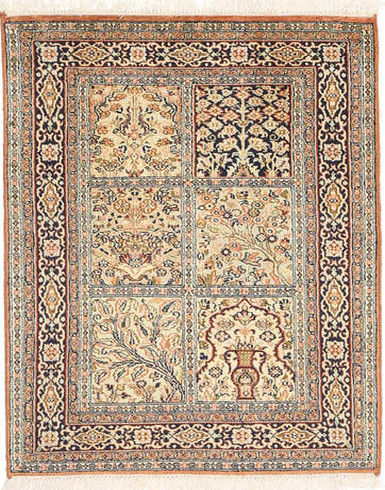
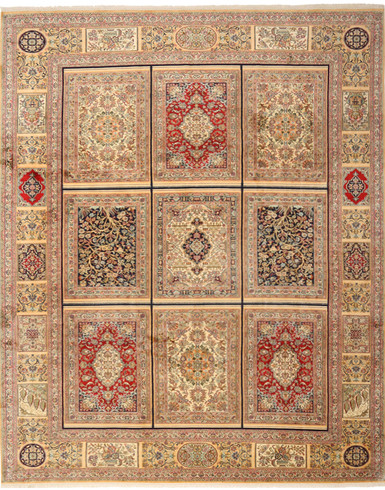
Bring Home The Timeless Luxury Of Authentic Handmade Kashmiri Carpets
Most carpets get replaced. They flatten out, the colours dull and within a few years you're shopping for a new one. Kashmiri carpets are different. The people who make them can spend an entire career learning a technique that machines still can't properly reproduce. Silk and wool can also age beautifully instead of simply wearing thin. You notice it the longer you live with one. Look closely and the detailing still has plenty to show. That's part of the reason these Kashmir carpets are often bought once and passed down through the family.
What Is a Kashmir Silk Carpet?
A hand-knotted carpet from Kashmir is a floor covering woven in the Kashmir Valley. The process has remained more or less unchanged for years. Moreover, Authentic Kashmiri carpets can be produced by a machine in a matter of hours. But a bona fide handmade Kashmir carpet is a work of weeks, if not months, as it is knotted one knot at a time.
- Hand-Knotted Carpet: Every single knot is tied round the warp threads one by one. It takes time but it also gives the weaver the control needed for fine patterns and small details.
- Silk Carpets: Silk, wool and blends each have their own character. What’s best depends on where the carpet will be put and how much use it will get.
- Natural Fibres: Florals, paisleys and medallions are not passing trends. They are part of the visual lexicon of Kashmir carpet-making.
- Best Traditions: Authentic Kashmiri carpets are made of individual knots from the bottom. Chain-stitch and crewel work are made by sewing on a base fabric. Both are genuine Kashmiri crafts, but the production varies.
- Handcrafted Decor: Embroidered items such as chain-stitch or crewel work demand different consideration. The strand is sewn to a base fabric, not knotted into the carpet’s structure.
How to Check Knot Density of Kashmiri Rugs?
You don't have to take anyone's word for knot density. Turn the authentic Kashmir carpet over and look at the back. Count the knots within a one-inch square where they are easier to see than through the pile. Coarser wool pieces usually fall around 80 to 150 knots per square inch. Fine silk can reach several hundred.
- Reverse Inspection: Knots can be seen more clearly from the back than from the front. Choose a one-inch strip and count what is visible.
- Counting Knots: You already have a head start on how tightly the carpet was knotted by measuring a single square inch.
- Coarser Wool: The coarser wool typically has 80 to 150 knots per square inch while the highest quality silk can reach a few hundred. Flowers and fine lines usually are more crisp looking when the knot count is higher.
- Solid texture: A tightly knotted carpet usually feels firmer under the hand. It’s a handy second check to actual count.
- Seller Verification: Somebody who knows about Kashmir carpets can tell you the knot count. If you’re looking at an expensive piece and the answer isn’t obvious, then it’s worth asking a few more questions before you buy.
How Are Hand-Knotted Kashmir Carpets Made?
The process takes time. Once you see how much skill, dedication and precision go into each stage of making handmade Kashmir carpets, the price as well as true value of these masterpieces starts to make more sense.
- Design Planning: A designer works out the motif, colours and border before the weaving begins. The design can follow a traditional pattern or be created for a particular customer.
- Talim Preparation: The design is translated into a coded system indicating the type of knots, their colours and how long each row lasts along the weft. It is something like a sheet music and is rehearsed line by line.
- Loom Preparation: The warp and weft are arranged on a pitched floor loom or an ordinary floor loom, determining the size and rough foundation of the carpet.
- Hand Knotting: The Talim is now followed and each knot is tied by hand by the artisan. The work can take several weeks or more than a year depending on the size and density of knots.
- Pile Trimming: When all the knots are tied, the pile is sheared to one length. This makes for a clear and well-proportioned pattern.
- Carpet Washing: The final Kashmir carpet is washed to velvet the fibres and to bring out their natural lustre. Before leaving the workshop, it is also inspected for knotting, colour and general soul mate.
- Final Inspection: This is not just for a finishing final touch because uneven pile can also shroud the pattern & make it look fuzzy. The rug is washed and inspected for uniformity, colour and finish.
What Makes Kashmir Silk Rugs Unique?
There’s no machine that can actually replicate or manipulate the knotting required for this ancient art form. A lot of things that make these Kashmir rugs so special and highly sought after in the world are mentioned below in detail.
- Hand-Knotted Tradition: All the knots are individually knotted by the artisan and the expertise is what makes every rug unique. It also accounts for some of its power and complexity.
- Flexibility: Higher density offers the weaver more freedom to create finer curves, smaller medallions, and more sophisticated shading effects. This is especially true in good kasmir silk carpets.
- Silk Shine: Due to the fibre’s characteristics, silk has natural shine and a sleeker appearance. Wool is more rustic and good for everyday living. A wool-silk blend is kind of middle of the road.
- Durability: Floral, paisley, medallion and flowery vines are not just staples, but longstanding design traditions in Kashmiri carpets.
- Persian Affect: Many contain symmetrical medallions, as well as dense floral fields and stacked borders. Nonetheless, this rug has its own character.
- Talim Instructions: It provides the weaver with a specific order in which to work and ensures that an elaborate pattern will be uniform throughout the carpet from top to bottom.
Types of Kashmiri Silk Carpets and Rugs
There are more options for Kashmir carpets for people than they usually think. While many associate the region solely with pure silk, the diverse range of materials and weaving techniques that has something for every space. Here are the types of rugs that are popular among people:
- Kashmir Silk carpets: Silk rugs have a unique delicacy and a surprising brightness. These Kashmiri silk rugs are decorative and tend to suit formal rooms.
- Kashmiri Wool Carpets: Wool lacks some of the brilliance of silk but compensates with durability. It is suitable for the whole home if you have good traffic regularly.
- Wool-Silk Blends: Wool-silk rugs have features of both wool and silk. You will receive some of the benefits of silk's lustre but keep more practicality of wool.
- Chain-Stitch Rugs: Chain-stitch and related rugs are formed by stitching yarn onto a woven ground rather than being knotted.
- Crewel Work: Traditional and Persian-inspired rug designs alongside soft contemporary-styled and one-off bespoke designs based on your particulars.
Kashmir Carpet Patterns and Motifs: When you know something about how these rugs are made, it helps to know just what you have.
- Floral Patterns: Roses, lotuses and chinar leaves are common. They may fill the entire field or appear in smaller groups within the design.
- Paisley or Buta: The familiar curved teardrop shape appears throughout Kashmir design. It can be repeated across the field or used as part of a border.
- Central Medallions: Central medallion surrounded by border(s) is one of the most traditional, iconic and familiar layouts. The medallion and field relationship determines much of the character of a carpet.
- Detail derived from Persian: Dense floral fields, balanced medallions and multiple borders demonstrate influence of Persian taste in Kashmir carpet-weaving.
- Modern Variations: Contemporary work often quotes recognizable motifs but simplifies them. With themes that are clearer and colors that are calmer, they feel more contemporary, but the traditional hand-knotted method is intact.
What Makes a Kashmir Rug so Valuable?
When you know what you’re looking at, the price stops feeling random. Every authentic hand-knotted Kashmir carpet is an investment in human skill, demanding thousands of hours of intense focus. These characteristics will help you judge the true quality of Kashmir carpets:
- Quality of material: The cost of silk is generally more than that of wool due to the material itself as well as the amount of detail that can be afforded. Wool and blends can be priced differently based on quality.
- Knot density: More knots means more work for each square inch of your rug.
- Size of the Rug: The larger the carpet, the more material and the more hours at the loom will be needed.
- Complexity of Design: Having more colors and more intricate work means you have to concentrate and work carefully and that is a factor which helps to give the price.
- Craftsmanship Quality: Look at the pile, edges and finishing. Clean work and an even pile can tell you a lot about how carefully the carpet was made.
- Age & Condition: Older handmade Kashmir carpets need good condition and a documented history for its age to add meaningful value.
How to Choose the Right Kashmiri Carpet?
With those price factors in mind, the question gets practical fast: which original kashmiri carpets actually suit your home? Because an original Kashmiri carpet is a lifelong investment & choosing one is a major design decision. By breaking down your choice into key structural requirements, you can find a carpet that go with your space:
- Material Selection: Kashmiri silk rugs works well in lower-traffic decorative spaces. Wool is better for everyday wear. A blend gives you something between the two.
- Room Usage: A room's name doesn't tell you much about the carpet it needs. Foot traffic and furniture placement matter more.
- Size Measurement: Check the room and furniture dimensions first. A carpet that is too small can look disconnected rather than bringing the space together.
- Colour Matching: Traditional, Persian-inspired and contemporary styles can all work. The existing furniture and décor should help you decide which direction feels right.
- Knot Comparison: Whatever style you prefer it is worth checking the knot count. It gives you something concrete to compare rather than relying only on appearance.
- Care Requirements: Silk rugs needs more careful handling. Wool is easier to manage in a room that sees regular daily use.
How to Identify an Authentic Pure Kashmir Carpet?
Once the material and the size of the room are decided along with the design, then there's one last thing you've got to do before you buy: verify the carpet is actually the carpet you're being sold. This is because high-quality replicas and machine made Kashmir carpets frequently flood the market. Here, check how to check the rug yourself to protect your investment:
- Natural Fibres: Real silk, wool or a mix is used in an authentic item. The textile should be felted natural rather than synthetic.
- Knot Weaving : True hand knotted Kashmiri carpets structure differs from a machine made or hand tufted rug.
- Back Inspection: You can look at the knots on the backs. Regular and clear in-line knots are positive sign of hand-knotting and density.
- Handmade Variations: There are slight pattern variances in handmade rugs. That doesn't mean that there is anything wrong with the piece.
- Provenance Check: A seasoned seller will be able to tell you the origin of the carpet and how it was made.
- Check the Documentation: All papers should be examined to find out what they really authenticate. Fabric and origin are separate issues from statements of age or value.
How to Care for Your Kashmiri Silk Carpet?
Some plain and simple cleansing, and a little care amidst moisture and sunshine, and these Kashmir carpets hold their colour and feel for years. Follow these tips to make sure your carpet ages beautifully:
- Light Vacuuming: Use the lowest vacuum power setting and avoid the beater bar. It tugs at the fibres and adds unnecessary wear.
- To Blot a Pour: When you have a spill, use a clean cloth to blot it. Rubbing may embed a Liquid Deeper into the Pile and Extend the Stain.
- Sunlight Protection: Direct sunlight can affect natural colours over time. Where possible keep the carpet away from strong direct exposure or rotate it occasionally.
- Traffic Control: Areas that get walked over repeatedly can wear faster. This matters even more with luxury silk carpets.
- Professional Cleaning: Hand-knotted silk rugs and wool need the right cleaning methods. A general-purpose treatment may do more harm than good.
- Carpet Restoration: Fringes, edges and worn sections of pile can often be repaired. Proper restoration can give an older carpet many more years of use.
Why Choose Jansons Carpets for Handmade Kashmir Carpet Designs?
A good Kashmir carpet comes down to more than the design on top. The craftsmanship underneath matters. So does the material and where the piece comes from. At Jansons Carpets, we bring traditional Kashmir artistry together with a carefully chosen range for classic and contemporary interiors.
- Authentic Hand-Knotted Pieces: Every traditional Kashmir carpet is genuinely hand-knotted. The traditional construction is kept at the centre of the work rather than replaced with a machine-made shortcut.
- Direct Artisan Connection: We work with skilled artisans in Kashmir. This keeps traditional knotting and finishing methods part of the process.
- Material & Origin Documentation: Documentation covering the material and origin is provided at the time of purchase. This gives you clear information about the piece you're taking home.
- Made to Your Specifications: Custom Kashmir carpets can be created around your preferred size, colour and design. A sample is reviewed before the full weaving begins.
- Cleaning & Restoration Support: The service doesn't end with the purchase. Cleaning and restoration are also available for handwoven silk carpets.
- Four Decades of Experience: More than 40 years in the trade have gone into sourcing and working with handmade carpets for clients in India and abroad.
- See Them in Person: The Delhi showroom gives you a chance to see the Kashmir carpets up close. Our team can also help you compare materials, designs and sizes.
If you'd rather see things in person, our team can walk you through the material, design and sizing before you make a decision. You can also check other material carpets like Tribal carpets, Kilim rugs, Afghan rugs and many more as per your need.
What Kind of Kashmir Silk Carpets Are You Looking For?
Every space has different needs. A busy room may call for a durable wool carpet while a quieter formal space can make better use of silk. You may prefer a traditional floral or medallion design, or you may want something made around your own colours, dimensions and ideas.
Have something specific in mind? Call +91 9811129095 or visit our contact page to explore our collection or begin a custom order.
FAQ
What distinguishes a Kashmir carpet?
A real Kashmir carpet is completely hand-knotted; it's not machine-made. Each knot is tied by hand around the warp threads, and that's what makes these rugs so dense and allows for details that no machine-made rug can have. The patterns themselves derive from design motifs that have been passed down through generations in the Kashmir Valley.
Do you buy real hand-knotted Kashmir carpets from India?
Yes. Kashmir silk carpets are knotted by hand from beginning to end, following a method known as Talim. The weavers work knot by knot and can take anywhere from a few days to weeks to finish one piece of rug, depending upon its size and knot count. True Kashmir expertise is evident in these hand-knotted Kashmir carpets unlike mass-produced imitations.
What materials are Kashmir carpets made from?
A Kashmir silk carpet may be spun with either pure silk, pure wool or mixed wool and silk. Silk has a far finer cell structure and far more natural shine, sheep wool is built for everyday life, and mixed wool-silk has a dash of both. Really, it’s a question of what room you’re thinking about and the amount of traffic it receives – we're here to help you.
What is Talim in carpet weaving?
Talim is the coded written instructions that describe the design of a rug, and which is read by the weaver. This corresponds to the number of knots, rows and colours needed to weave the pattern accurately, to the extent that even complex patterns can be woven exactly across a large carpet. It is traditional in Kashmir silk carpet-making, and one of the reasons these carpets can carry such intricate patterns.
What is knot density and why is it important in Kahsmiri carpet?
Knot density is a measure of how many knots are tied on one square inch of carpet and it can give you a hint on how high the quality of the workmanship is. Wool piles usually have 80-150 knots per square inch but fine silk have several hundreds. Greater knot density means more subtlety and weaving must be longer for more knots to be added.
What makes a Kashmir carpet so costly?
The price of Kashmir silk carpets depends on its material, knot density, size, complexity in design and the effort related to its processing.
How do I know what Kashmiri Carpet to select?
Begin by considering the use of the room. Silk rugs are a good choice for low-traffic, more decorative areas; wool holds up better in rooms where you get a lot of use. Take measurements of the room and your current furniture before you shop for size, then select a look — classic Persian, contemporary, etc. — that you can easily pair with the rest of the room.
Are Kashmir Silk carpets for the floor or just showing off?
Kashmir Silk carpets can definitely be installed on the floor, they just require a little more care than wool. They are good to place in rooms with moderate foot traffic not to be used in areas of the house that have high traffic as this will wear them out faster than wool or wool-silk carpet. For the active areas of the home, wool or a wool-silk mix is the wiser choice.
Are Kashmir rugs suitable for embassies or official houses?
Yes. Wool and wool-silk rugs work well in high-traffic areas, and custom sizing options make it easy to create the ideal area rug for your space. These are the sort of projects we regularly do for institutional clients.
Can you make custom-size rugs for institutions or embassies?
Yes. We can design and deliver custom Kashmiri carpets for your institutional space! The Design is finalised first; you will be able to see a sample prior to starting full production of the design, preventing any surprises in the final product.
Do you provide carpets to diplomatic and government customers?
Yes. Jansons Carpets supplies homes and institutions such as embassies and government offices. We have both stock and bespoke Kashmiri rugs, and with every purchase of custom rugs, we provide documentation on the material used and origin, along with design inspiration and story about it.
Why choose Jansons Carpets for handmade Kashmir carpets?
Every Jansons Carpet is meticulously hand-knotted by expert artisans in Kashmir, not machine made. We include information about material and origin with every sale, and in addition to custom orders, we offer cleaning and restoration services. With over 40 years in the trade, we’ll be happy to help you find that perfect piece for your space – stop by our showroom in Delhi or contact us to start the conversation.